
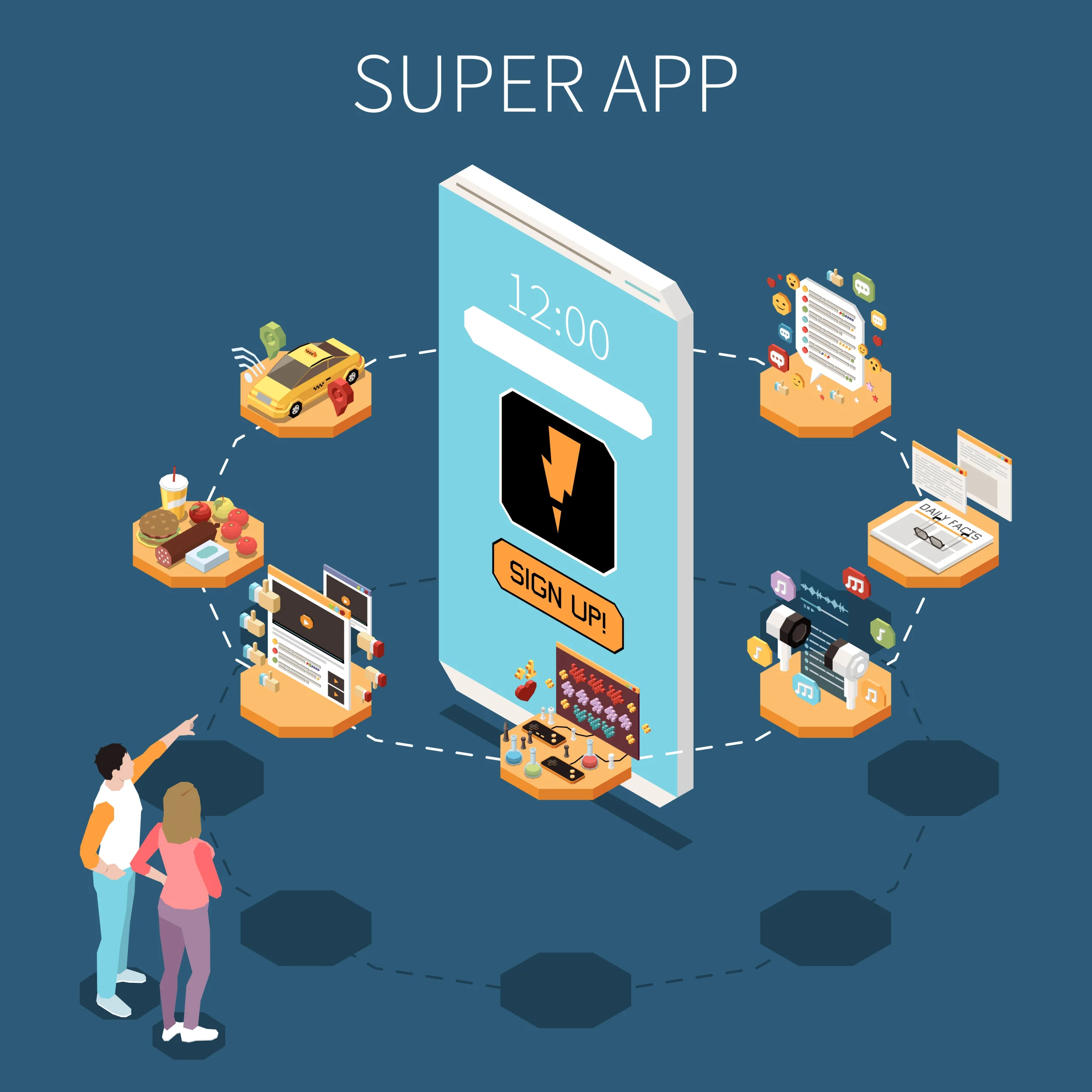

Super apps are changing the way people use mobile technology by bringing multiple services into one convenient digital ecosystem. Instead of switching between separate applications for payments, shopping, food delivery, transportation, messaging, entertainment, or financial services, users can access several functions from a single platform.
As mobile users increasingly expect convenience, personalization, and seamless digital experiences, businesses are exploring whether they should continue investing in traditional single-purpose applications or move toward the super apps model. In 2026, this question has become particularly relevant as super apps evolve from simple multi-service platforms into broader digital ecosystems supported by AI, mini-apps, integrated payments, and connected services.
For businesses planning their next digital product, understanding the difference between Super Apps and traditional apps can help determine which approach delivers better long-term value.
What Are Super Apps?
Super apps are phone platforms that bundle several closely linked services in one app. Instead of making people download and track many different apps, a super app gives one place to start for common tasks.
For instance, a super app can help users do things like:
- Make digital payments
- Buy items online
- Order meals
- Get rides or book travel
- Handle personal money matters
- Chat with companies or other people
- Find entertainment options
- Open small third party mini apps
What matters most is not only the amount of features. A good super app links these parts so they feel like one smooth experience. It usually uses the same login for identity, the same payment tools, a shared data setup, and a consistent screen layout.
This path is gaining weight in mobile app work. Companies want tighter ties with users, and they also want less hassle when moving between services.
Super Apps vs Traditional Apps: What’s the Difference?
Traditional mobile applications usually focus on solving one primary problem. A food delivery app helps users order food, while a banking app focuses on financial services. This focused approach can create a simple and highly optimized user experience.
Super Apps, on the other hand, attempt to connect several services within one ecosystem.
The difference can be summarized as:
Traditional Apps
- Focus on one primary service
- Simpler architecture
- Easier initial development
- More focused user experience
- Users may need multiple apps for different needs
Super Apps
- Combine multiple services
- Support interconnected features
- Can include mini-app ecosystems
- Offer integrated payments and accounts
- Create opportunities for cross-selling and higher engagement
Neither model is automatically better for every business. The right choice depends on the company’s target audience, business model, resources, and long-term product strategy.
Why Super Apps Are Becoming a Major Mobile Trend
A big part of why super apps are growing is simple: they save time. People now want apps to connect with each other. They do not want to jump between separate tools all day.
In industry reports, a super app is described as a platform that brings different services together. That can include payments, shopping, ride tools, chat features, and money related functions. If everything sits in one place, users do not have to switch apps as often.
There is also an ecosystem side to it. When people keep using more than one service inside the same app, companies get extra chances to keep users interested. They can also add new features and set up returns that happen again and again.
The idea is not limited to the usual examples anymore. By 2026, more discussions frame it as an ecosystem plan. The talk often includes mini apps, linked services, AI features, identity systems, payment rails, and platforms that work with partners.
How Super Apps Can Benefit Businesses
For businesses, Super Apps can offer several potential advantages.
1. Better Customer Retention
When customers can complete several tasks without leaving the application, there are more reasons to return regularly. A platform that combines shopping, payments, loyalty, and customer support can become a frequent part of the user’s daily routine.
2. Multiple Revenue Opportunities
A traditional application may depend on one primary revenue stream. A super app can potentially generate revenue through transactions, subscriptions, commissions, advertising, partnerships, premium services, and other offerings.
3. Improved Cross-Selling
Businesses can introduce relevant services based on what customers already use. For example, a financial platform could offer insurance, investments, bill payments, or shopping-related services within the same ecosystem.
4. More Connected User Experiences
Instead of moving information between multiple applications, users can complete connected activities in one place. This can make the overall digital journey faster and more convenient.
The Role of AI in Super Apps
Super Apps are shifting. This is not just about piling on more tools.
AI is now part of how these apps workday to day.
With AI, a Super App can recommend options that match what each person tends to want. It can also handle small tasks that repeat all the time. Help chats can move quicker, and problems may get fixed sooner. The app can also track how people interact with it and notice regular trends. It may even change what is shown on the screen so the next step feels clear.
Right now, many new plans for Super Apps are bringing in AI agents.
These agents do more than show buttons or open links. They guide a person through several services. They also help set things up in a good order.
For example, instead of tapping through separate sections, a person can say a goal to an assistant. Then the assistant can guide the steps. It can also carry out actions across linked services.
If this goes as planned, phone apps could feel like they are one step ahead. They might also feel more fitted to each user.
Why Traditional Apps Still Have an Important Role
Super Apps are getting more attention, but regular mobile apps will not disappear.
If a company has one clear goal, a single task app can make more sense. These apps are usually simpler to plan and build. They are also easier to keep running over time, tune when needed, and explain to users.
For new startups, a small app launch can be a smart test. It lets the team see if the idea works before adding more services later.
So a business should not pile on extra features just because the super app trend is popular. Each feature should earn its place and help the customer in a real way.
Choosing the Right Mobile App Strategy
Choosing between a traditional app and a super app requires careful planning. Businesses should consider:
- Who are the target users?
- What problems does the application solve?
- Are multiple services naturally connected?
- Will users benefit from an integrated ecosystem?
- Can the business support a larger technical infrastructure?
- What security and privacy requirements apply?
- How will the application scale as new services are added?
For companies considering this transformation, working with an experienced app development company in Bangalore can help turn a broad product vision into a practical development roadmap.
An experienced development team can help with architecture, UI/UX design, API integration, cloud infrastructure, security, scalability, and ongoing application maintenance.
Why Choose 5ine Web Solutions for Mobile App Development?
Building a modern mobile application requires more than attractive screens. Businesses need a reliable technical foundation capable of supporting performance, security, scalability, and future expansion.
5ine Web Solutions helps businesses turn mobile app ideas into functional digital products with a focus on user experience and modern development practices.
Whether a company needs a focused traditional application or is planning a larger ecosystem, the right development strategy should be designed around its business goals.
As an app development company in Bangalore, 5ine Web Solutions can help businesses evaluate their requirements, select appropriate technologies, design intuitive user experiences, and build applications that are prepared for future growth.
Businesses looking for the best mobile app development company in Bangalore should consider factors such as technical expertise, development methodology, communication, scalability, post-launch support, and the team’s ability to understand business objectives—not simply development cost.
Will Super Apps Dominate the Mobile Market?
The future is unlikely to belong exclusively to either Super Apps or traditional applications. Instead, both models will continue to serve different business needs.
Super apps have strong potential in industries where multiple services naturally connect, including fintech, retail, travel, mobility, healthcare, telecommunications, and lifestyle services. Current industry analysis also points toward continued growth of integrated digital ecosystems and super-app models.
Traditional apps, meanwhile, will remain valuable for specialized products where simplicity and focus are more important than offering a wide range of services.
The real winner will be the approach that delivers the best experience for the target audience.
Conclusion
Super Apps represent an important direction in the evolution of mobile app development. By combining multiple services, payments, mini-apps, personalization, and increasingly AI-powered experiences, they can create digital ecosystems that keep users engaged within a single platform.
However, building a super app is significantly more complex than creating a traditional mobile application. Businesses need scalable architecture, thoughtful UX, strong security, reliable integrations, and a clear long-term product strategy.
For some businesses, a focused traditional app will remain the smartest choice. For others, building a super-app ecosystem can create significant opportunities for growth.
The key is not simply to build more features—it is to build the right digital ecosystem for your users. With the support of an experienced mobile app development company in Bangalore, businesses can make that transition strategically and create mobile experiences designed for the future.