
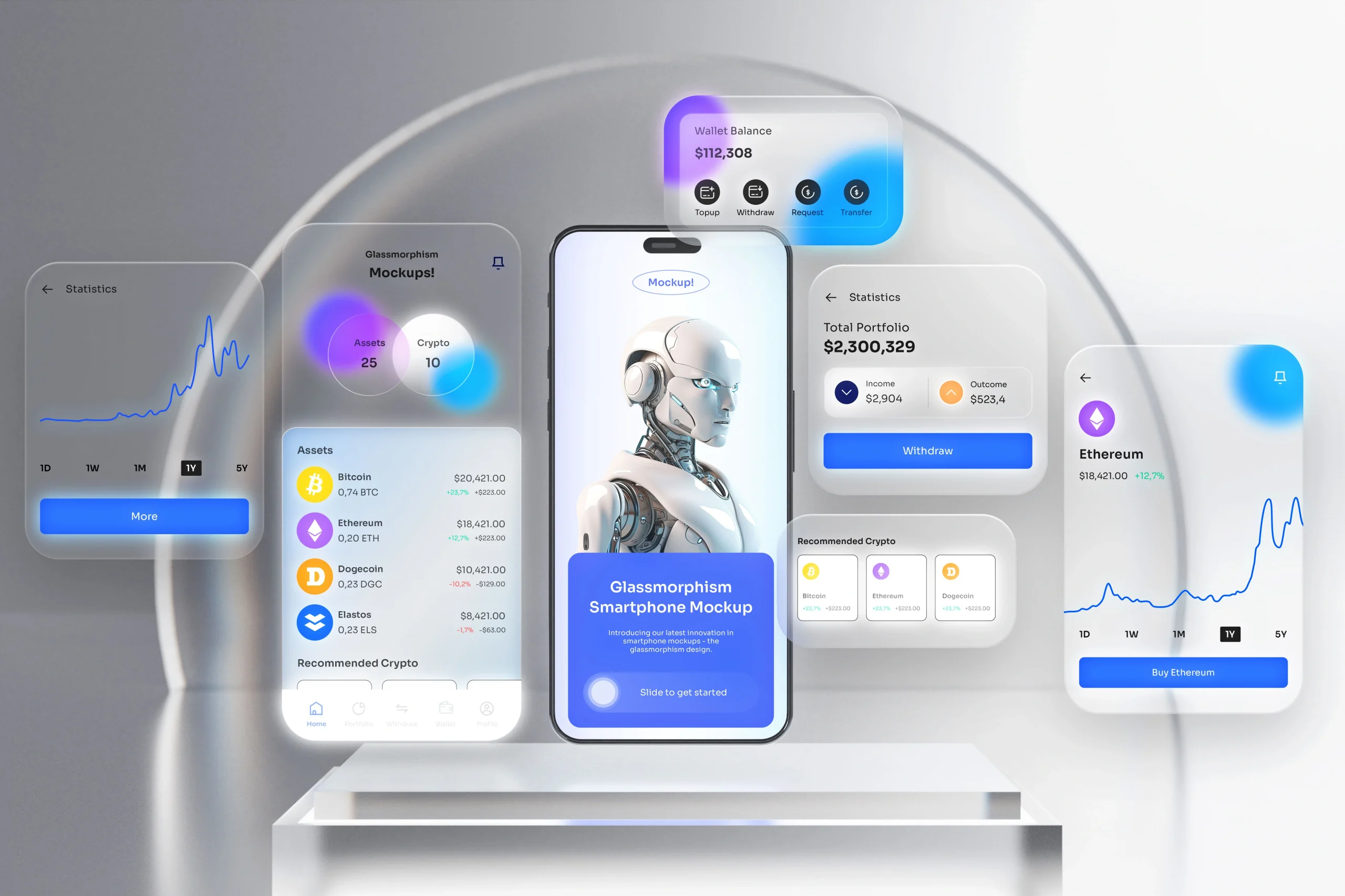

A mobile app is no longer just a digital extension of a business. In 2026, customers expect apps to understand their needs, respond instantly, automate routine actions, and deliver personalized experiences. At the same time, businesses are looking for ways to reduce development time, operational costs, and repetitive manual processes.
This is where artificial intelligence, automation, and modern app development practices are changing the way businesses build mobile experiences.
Many features that once required extensive manual development can now be automated or enhanced using AI-powered technologies. Instead of spending development resources building every process from scratch, businesses can use intelligent tools to create faster, smarter, and more scalable applications.
1. Manual Customer Support and FAQ Systems
Traditional mobile apps often include static FAQ pages, contact forms, and basic support sections. While these features are still useful, manually designing every possible customer question and response is becoming inefficient.
AI-powered conversational assistants can now understand natural language, analyze customer questions, and provide relevant answers instantly.
For example, an e-commerce Mobile App can help customers track orders, understand return policies, find products, and resolve common issues without requiring a support executive for every interaction.
Instead of creating hundreds of predefined responses, businesses can integrate AI that learns from approved business information and provides contextual responses.
This doesn’t mean replacing human support completely. Complex or sensitive issues can still be transferred to human agents while AI handles repetitive queries.
For businesses working with a mobile app development company in Bangalore, integrating AI-powered support into an existing or new application can significantly improve customer experience while reducing repetitive support workloads.
2. Manual Personalization and Product Recommendations
Personalization has become an important part of modern mobile experiences. However, businesses should not rely entirely on manually created customer segments and recommendation lists.
Imagine an online shopping app where every customer sees exactly the same products. The business may have valuable customer data, but without intelligent analysis, that information isn’t being fully utilized.
AI can analyze user behavior such as:
- Products viewed
- Previous purchases
- Search history
- Frequently used features
- Session behavior
- Location and preferences
- Engagement patterns
The system can then generate personalized recommendations based on these signals.
For example, a retail Mobile App can automatically recommend products based on what a customer has previously browsed or purchased.
This approach allows businesses to move from basic personalization to predictive experiences.
Instead of manually deciding what each customer should see, AI can continuously analyze behavior and adapt the experience in real time.
3. Manual Data Entry and Form Processing
Forms are one of the most common features in business applications, but manually entering information is still a major source of friction.
Whether it is an insurance application, expense claim, customer registration, invoice submission, or employee onboarding form, users don’t want to spend unnecessary time typing information that could be captured automatically.
Modern Mobile App development can use technologies such as OCR, computer vision, speech recognition, and AI-based data extraction to automate these processes.
For example, a user could take a photograph of an invoice. Instead of manually entering the invoice number, date, vendor, and amount, the app can extract the relevant information automatically.
Similarly, voice input can allow users to provide information without typing long responses.
This can make applications faster and easier to use while reducing errors caused by manual data entry.
For businesses investing in app development services in Bangalore, intelligent document processing and automated data capture can be particularly valuable for finance, logistics, healthcare, retail, and enterprise applications.
4. Manually Created Notifications and Reminders
Notifications are essential for keeping users engaged, but manually creating every notification is not an efficient strategy.
A modern application can use AI and automation to determine when a notification is relevant, what information it should contain, and when it should be delivered.
For example, a fitness Mobile App could automatically remind users about workouts based on their activity patterns.
A banking app could alert users about unusual transactions.
An e-commerce app could notify customers when a previously viewed product becomes available or when an order status changes.
The key is moving from generic notifications to intelligent, context-aware communication.
Instead of sending the same message to every customer at the same time, businesses can create automated notification systems that respond to individual user behavior.
This can improve engagement while reducing notification of fatigue.
5. Manual Analytics and Business Reporting
Businesses have traditionally relied on dashboards and manually prepared reports to understand how their apps are performing.
While dashboards remain important, businesses shouldn’t have to manually analyze every data point to discover what is happening.
AI-powered analytics can identify patterns, anomalies, trends, and opportunities automatically.
For example, an AI system could identify that:
- Users are abandoning a particular checkout screen.
- A specific feature is receiving very little engagement.
- Customer activity has increased during a particular period.
- A particular user segment is more likely to convert.
- An unusual drop in transactions has occurred.
Instead of simply presenting numbers, intelligent analytics can help explain what those numbers mean.
This makes business decision-making faster and more data-driven.
What Businesses Should Build Instead
The goal isn’t to remove human involvement from Mobile App development. It is to use technology where automation can deliver better results.
Businesses should focus development efforts on experiences that genuinely differentiate their products while allowing AI and automation to handle repetitive processes.
A modern application should ideally combine:
AI + Automation + Personalization + Human Oversight
This approach can help businesses create applications that are easier to scale and more responsive to changing customer expectations.
How 5ine Web Solutions Helps Build Smarter Mobile Apps
Choosing the right technology partner is important when transforming a traditional application into an intelligent digital experience.
5ine Web Solutions helps businesses approach Mobile App development with a focus on usability, scalability, automation, and emerging technologies.
As a technology partner, 5ine Web Solutions can help businesses identify which parts of their application can benefit from AI and automation and which processes should continue to involve human decision-making.
From application strategy and UI/UX design to development, integration, testing, and deployment, the right app development services in Bangalore can help turn a basic application into a smarter business platform.
The objective shouldn’t simply be to build another app. It should be to build a Mobile App that can understand, automate, and adapt.
The Future of Mobile App Development Is Intelligent
In 2026, businesses have an opportunity to rethink how applications are built.
Customer support doesn’t always need a manually maintained FAQ system. Personalization doesn’t need to depend entirely on manually created segments. Data entry doesn’t always need to be typed. Notifications don’t need to be identical for everyone. And analytics shouldn’t require humans to inspect every metric before discovering an important trend.
AI and automation can take care of repetitive work while development teams focus on creating better products and experiences.
For businesses planning their next Mobile App, the question is no longer simply, “What features should we build?”
The better question is:
“Which features should our app be smart enough to handle on its own?”
That shift can help businesses create faster, more intelligent, and more future-ready mobile experiences.
With the right strategy and a capable Mobile app development company in Bangalore, businesses can move beyond traditional app development and build applications designed for the intelligent, automated future.